Showing posts with label marketing. Show all posts

Tuesday, 9 April 2013

A selection of infographics about Indonesia and South East Asia

A selection of infographics about Indonesia and the surrounding region.

This wasn't meant to be a blog post; I have been trying to put together an infographic for an event I work on in Indonesia (infographic to be mainly about economics, investment and infrastructure) and as part of that did a search for other infographics about Indonesia and the region so I didn't repeat anything and maybe get some top tips. I was making notes as I went and thought that it would make quite a good blog post. So here you go!

I guess the digital marketing nature of infographics meant most of the ones I have found are about 'Digital Marketing'. (click on links for complete infographics):

INDONESIA – GENERAL INFORMATION (undated)

Beautifully designed infographic giving top-line information on Indonesia – population, area, history, economy - from a US graphic designer. No source or date though, so I probably wouldn’t quote it!

Pros: Beautifully designed infographic with what looks like quite extensive information
Cons: No date or source, so difficult to be sure of accuracy
Interesting stat: "Indonesia is made up of 17,508 islands"

Annalise Ogle | Indonesia

INDONESIA - THE NEXT BIG THING IN DIGITAL MEDIA (March 2011)


Although 2 years out of date, provides some nice simple stats on digital usage in Indonesia from the Singapore Management University (SMU).

Pros: Some interesting (albeit old) trends for anyone looking at marketing (especially digital) in Indonesia
Cons: 2 years out of date now. Best used as ‘trends’ rather than solid facts
Interesting stat: "Indonesia has more Facebook users than the population of Canada"

Indonesia: The Next Big Thing In Digital Media

DIGITAL MEDIA IN INDONESIA (Nov 2011)

Well, it’s more about social media than ‘digital media’ but goes into depth about Twitter and Facebook. Again, a little old (Nov 2011), but some nice graphics. Also from SMU.

Pros: In-depth information on social media, especially Facebook and Twitter
Cons: A little out of date now and some of the comments don’t actually make sense
Interesting stat: "Thursday is the busiest Twitter day in Indonesia" (in Nov 2011)

Indonesia To Become A Leading Nation For Tech Start-ups? - Tech in Asia

BURSON-MARSTELLER ASIA-PACIFIC SOCIAL MEDIA (April 2011)

I was hoping there may be a more recent edition of this by now, but it seems like this was a bit of a one off (this company did publish a Global Social Media Check-Up in 2012 which is also worth a look). Anyway this is still an extensive (22 pages) analysis of social media in Asia Pacific.

Pros: Loads of information here split by country if you’re looking at social media across this whole region
Cons: Sorry, it’s also a year and a half old.
Interesting stat: "16.5% of Indonesians use the Internet" (think of the potential to grow!)

 
Asia Internet Insights from Burson-Marsteller

INDONESIA MARKET OVERVIEW – MOBILE (Jun 2012)

This overview of the Indonesian mobile market is compiled by mobile company InMobi and gives a nice top level view on growth and use of different mobile handset brands.

Pros: Good info on handset usage
Cons: Not hugely helpful with regard to mobile marketing trends (beyond ad impressions)
Interesting stat: The prominence of Nokia and Samsung is interesting especially if you are used to the dominance of iPhones in some European and North American countries.

Indonesia Mobile Ad Market Doubles in a Year, Android Growing Fastest - Tech in Asia

TOP FACEBOOK PAGES IN INDONESIA (updated monthly)

This infographic seems to be published monthly by SocialBakers on We Are Social. Does what it says on the tin, gives you the top performing Facebook pages in Indonesia.

Pros: Gives you the current Facebook zeitgeist of brands and very up to date
Cons: Not much other Facebook analysis
Interesting stat: The two most prominent fan pages are Blackberry and Blackberry – showing the importance of this brand in Indonesia. Apple who?!

Top Facebook Pages in Asia, Feb 2013 [Part 1] | We Are Social Singapore


And finally...

IS INDONESIA MORE ENTREPRENEURIAL THAN THE US? (June 2012)

This insightful blog post calls into question the content of a recent infographic that looked at entrepreneurship and innovation around the world. 

Whether you agree or not, he does make a good point – don’t believe everything you see – by infographics making data easily digestible they can sometimes mask the information behind them, or even be entirely erroneous. So check your sources, and do your own research where possible! 

Beware of infographics, especially if the findings are too good to be true
Related posts
Monitor the online buzz around your brand (May, 2009)

Thursday, 25 August 2011

Globalisation within construction - CIM PGDip Emerging Themes

Below is a short paper looking at the future of the construction industry specifically the impact of globalisation.
I thought this may be useful for construction industry bods interested in this particular theme that may well effect businesses in the next 5 - 10 years.

This paper was written as an assignment for the Emerging Themes unit of the Chartered Institute of Marketing (CIM) Postgraduate Diploma in Marketing, June 2011.

So I also thought it may be useful for anyone taking their CIM PG Dip Emerging Themes unit. I have emailed the CIM and checked that I could publish this on my blog to which they replied that as long as the document was correctly referenced, didn't contain any copywrited content etc then that was fine.

This is my own work so please reference if using it, or even better go back to the source content referenced in my bibliography for more information (that may be more accurate too!).

Related posts
Why do companies use illegal advertising? - uni dissertation (Dec 2008)

Friday, 23 July 2010

The year 2010 so far in search and digital marketing

Structured data and social media are the two major trends (in my humble opinion) to impact upon search and digital marketing so far this year.

I've posted just the once this year, I'm not proud about it, so i thought, 'what have i missed in online marketing and SEO this year?' and was it anything important?

So I've had a look, and put together my highlights of the first six months of 2010, this is in NO way comprehensive.

22nd Jan - 'Event' markup in Google's Rich Snippets. This was also followed by 'microdata' in March and 'recipes' in April. My only blog post this year explains what rich snippets are - and although these three updates are not mind-blowing the continued use and expansion of structured data in search is my first trend of 2010 and a big change that websites need to embrace.

28th Feb - Facebook was added to Google's real-time search. This relates to the second major trend of 2010, not real-time search but the rise of social media in digital marketing. Originally launched using Twitter (of course) amongst others, Google's and Bing's real-time search pushes social media further to the forefront of digital marketing. Watch a good video about real-time search and the history of SEO on SEOmoz.

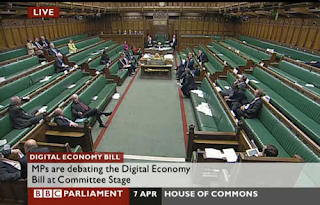
8th April - Digital Economy Act 2010. Hastily whizzed through parliament before government was dissolved for the general election, this is about regulating digital media. Specifically this covers how internet service providers (ISPs) must provide a list of people believed to have infringed copyright seemingly based on self certification by the copyright owner and ISP. There is no clear indication of checking the validity of evidence against these infringements so leaving the act open to potential abuse and limitation of civil liberty.

MPs debating the Digital Economy Bill
Do you feel represented?
(img source - bitter wallet)


7th May - New look Google. On a lighter note, Google has had a spring clean. Amongst other things what this may do is expose the extent of universal search to more people, making it all the more important to sort out those blogs, news articles, images, products. Like with the rise of social media, digital marketers have just been given more reasons why they should have their search fingers (that's the index on the left hand) in many pies.

11th June - Caffeine indexing system. Caffeine is Google's new search index. This is what it looks at when you type a keyword in and press 'search'. Caffeine apparently searches everything quicker through it's novel structure including real-time web, video, images, news. It will be a few months before we see if there's any direct impact on SEO but it does seem to back up the importance of the trends I mentioned earlier of structured data and social media.

Google caffeine search index

iPad15th July - iPad released. Could this reinvent the world as we know it? No. But i thought I'd mention it as websites race to get themselves iPad ready and EVERY competition at the moment offers one as a prize.

Soon - Google image search update. This doesn't seem to have taken effect yet for me, but apparently was launched recently and is "more intuitive and gets the user the answer a lot quicker". I know a number of sites where images are as important to their users as the text, but this has never been reflected in search. I hope this changes that, but we'll have to wait and see.

And let's not forget - The mobile web. Everyone i know (apart from me) has an iPhone or an Android powered phone. The mobile web is coming of age (sorry for the oft-repeated cliche but i honestly think it's justified this time) and those sites that cater for mobile users are going to have the edge. Especially sites which provide content relevant to those of us on the move - like sport results, restaurant listings, pub quiz answers etc.

With all this excitement and technological invention it sounds like SEO just got complicated. But i don't think it has, all these things are just important to bear in mind. A firm SEO footing is still good content, quality and quantity of links, relevance to your users and then you can look at reaching your audience in as many ways as possible.

Monday, 5 October 2009

peer² - Online marketing and social networking platform

Hmm, just testing this site - www.peer2.com.

When you ask to "embed the player" on your site apparently what it does is dump it in a post which is what it's done here. See below.

According to their website:

"Peer squared (peer²) is a free peer-endorsed online marketing platform that rewards you for promoting the brands, causes and products you love across the Internet."

May blog more once i've played with it.


Friday, 17 July 2009

What is the average click through rate for online banner ads?

Well it depends...

Those last three words are perhaps one of the most unhelpful answers you can get.

The reason for this post is that I've just been asked this question by a colleague in sales.

Now usually I’d fob off my sales colleague and say that they shouldn't be selling on click through rate (CTR), they should sell on who will see the advert, the demographic of our web users, the power of our brand - after all an ad that doesn't get clicked on doesn't mean that it hasn't been seen - BUT this time I thought, 'Why not? There must be some figures out there'. So here goes:
2%2% - Off the top of my head I’d say that a 2% CTR would be particularly successful. I’ve seen ‘averages’ suggested at conferences, seminars and by friends of anything from 0.1% to 1% but not usually any more.
0.1% to 0.37%0.1 - 0.37% - According to this post that quotes a study by MarkingSherpa with CTRs by banner size - I'm not sure of the B2B relevance of this though.
2.8%2.8% - This post quotes the same MarketingSherpa study however states a "conversion rate" of 2.8%. So what this means is with a CTR of 1%, you'd need 3571 people clicking till you made a sale (or whatever your conversion is).
So with this in mind, let's go back to, "Well it depends..."

What else matters for banner ads?
  • Branding – banner ads are like TV ads – there as much about branding as they are about click through so that’s an unseen metric that should be sold to any customers.
    • Association - By advertising with you they are receiving association with your website's brand and the prominence that provides. i.e. Seeing a brand advert on the ft.com will probably be enough to convince you the advertiser is not a dodgy spammer. The same advert on a blog such as this one, may not have the same effect.
    • Demographics - The demographic of your site users are also important to this branding exercise. If you have statistics on your visitors you should sell this to the advertiser. This is how facebook advertising works.
    • Page views should be as important a metric to quote as click-throughs. Page views are the only way to measure ad views. i.e. An advert has had 300 clicks, but if it's appeared on a page with 30,000 page views it's likely been seen and not clicked many times.
Top of Times Online home page with banner ad

Home page of the Times Online

  • Targeting– showing an ad for a video game company on the video game section of a technology website will get a higher click through than putting it in an irrelevant section.
  • Call to action – asking the user to do something increases click through – most banner ads seem to just consist of a logo and click here with no reason why you should bother. i.e. Win a prize, get a discount, find something that no other website has and that you need etc.
  • Ads designed for site – This is really just targeting again. The more personalized you can make your advert the better. It's even worth getting a screenshot of the website the advert is going on so you can mock up what it will look like when it's live.
  • Testing – running multiple ad variations in different slots and optimizing based on their performance is a sure fire way to increase click through. The more you test, the better results you can get.
    Google Adword example
    A text ad from Google Adwords

  • Positioning and size – an ad in the middle of the page gets higher click through than one at the bottom. At the top of the page, bigger ads perform better usually. Again, you can test this.
  • Text vs. image – there’s a load of discussion online about which is better – text can be better when subtly put in with your main content. Again test!
Related posts
Stop pop-ups popping up, online advertising needs to evolve (Nov 2007)

Friday, 8 May 2009

Monitor the online buzz around your brand

How to ensure you know what people are saying about your brand in social media, and what you can do to influence the conversation.

This was the title of a panel debate about buzz monitoring at Internet World 2009. Chaired by Tom Nixon of NixonMcInnes, with his colleague and two other speakers whose names I can't remember, one from Huddle, one from Attentio.

ENGAGEMENT

Get EVERYONE in your company engaged. Get everyone monitoring your brands, or the brands relevant to them. The more eyes you have out there the more you will pick up and the less you will miss.

Some tools to help you monitor your brands
Twitter Search
  • Google Alerts - Type in a search term, such as your brand, and set up an email alert or RSS feed.
  • Twitter Search - Search for terms and brands to find real time discussions on Twitter.
  • Google Trends - Monitor regional interest in topics and their appearance in Google News.
  • Technorati - Search the blogosphere for your terms and brands. Google Blog Search also does this, although not quite as well.
  • Trendpedia - Free tool from Attentio who was one of the speakers. Not sure of effectiveness but worth a play.
  • Company Buzz - Application on LinkedIn. Essentially it's just Twitter Search.
Tools to aggregate some of this content to you

There are lots of tools to monitor buzz but having to go from one to the other every day would be very time consuming so there are a variety of methods to get this information to come to you.
Newspaper with the word RSS on it
  • Email alerts - this is part of Google Alerts and obviously lets you get the information to your inbox. Any RSS feed can also be set up as an email alert with a variety of tools, Feedburner is a good one.
  • RSS readers - most if not all of the tools above output RSS feeds of your results. You can plug these into a reader such as Netvibes and iGoogle.
  • Addictomatic – This is an RSS reader with a difference. It's automatically set up to look at a number of sources and tools. Just type in your brand or terms, here's one I made earlier for number 1 breakfast spread, Bovril.
  • RSS manipulation - you can combine, change, filter and do pretty much anything with RSS feeds using Yahoo Pipes. It's not that simple for non-techies though, here's my short demo.
Things to bear in mind
Pack of Camel cigarettes
A pack of fags
A camel looking curiously
A mammal
  • Setting up an alert for a brand which can also mean something else may bring irrelevant results: For example "Camel" can mean the cigarettes and the mammal with a hump.
  • You could therefore nail it down by searching for "Camel cigarettes"
  • Or look for buzz where both the words "Camel" + "smoking" are used
  • And don't forget there may be other non brand names you can monitor, such as your CEO's name, any campaigns you are running, competitions you are doing, anything else about your brand that might be being talked about.
RESPOND
  1. If someone is interested in your product, the sales team can act on this and chase.
  2. If there are problems or issues with your brand then the relevant people can address these. Such as customer services or your technical support employees.
  3. People like to know they are being taken care of.
  4. Respond with AUTHENTICITY and have a clear consistent VOICE
  5. Be INTERESTING, USEFUL and HELPFUL
  6. This is a representative of your brand talking, don't reflect badly on the brand by being petulant or of no use.
  7. Also remember that it's just people you are talking do, ditch the sales and marketing speak, be yourself.
Related posts
YouTube, Facebook, BBC, Reuters discuss social media (Feb 09)
Stop pop-ups popping up, online advertising needs to evolve (Nov 07)
Aren't Google Alerts clever? (Nov 07)

Thursday, 7 May 2009

Should Google News pay publishers for their content?

Working for a publisher the discussion has come up on a number of occasions that surely Google should be paying us for the content we provide it via Google News.

Rupert Murdoch had a whinge about it last month:
"Should we be allowing Google to steal our copyrights? If you have a brand like the New York Times or the Wall Street Journal, you don't have to."
While, the managing editor of the Wall Street Journal, Robert Thomson came out with the slightly ridiculous:
"There is no doubt that certain websites are best described as parasites or tech tapeworms in the intestines of the internet."
Both quotes from the BBC article about this subject.

Should Google pay publishers for content? - No

It's right to expect to be paid in some way for content that you have spent time and money to produce.

Maybe when advertising revenues were strong it was something you could afford to ignore but now this source is receding digital needs to step up and produce another channel of profit. However, stating that Google should be the one to provide this revenue is a rather naive argument.

Google has found a way with Google News of taking what is available for FREE on the internet and making money off the back of it - through referrals to the rest of their offerings.
Stack of European newspapers
Off the back of this the main newspapers received a boost in traffic from Google News. When ad budgets were high, all was good. Increased traffic meant increased revenue from cost per impression, cost per click & cost per acquisition advertising business models.

But with no advertising money available thoughts turn back to the evil G. Surely it makes sense that if Google are making money from this content when no one else is then they should share this pot around.

Well no it doesn't, it's a crap argument. The publishers are offering their content for free online, to everyone. You can access the same content via traditional search engines (Google, Yahoo, Live Search) but nobody is asking for cash from referral here.

Until the content is not available for free on the internet, Google are never going to volunteer cash. They'll wait until somebody calls their bluff. If all the main newspapers pulled their feeds from Google News then they might enter into a discussion. This hasn't happened, yet.

Despite this Google still felt it was necessary to bitch back at the publishers claiming,
"[Google] has shared £3.3bn with publishers through ads program AdSense in the last year".
Well good point, but firstly Adsense is opt-in so doesn't apply to all publishers on Google News and secondly by making this statement Google is admitting that they do indeed owe the publishers something, schoolboy error.

How else can publishers make money online? - Subscriptions

Up until very recently most of the big players online were reluctant to broach the other obvious money from content method - paid for content / subscriptions.

The big UK exception to this is the FT, who in 2007 introduced a hybrid system where you could have 30 views per month before having to pay.

Subscription models become more viable with less money from advertising as site traffic and unique users become less important to the bottom line. Quality, uniqueness and diversity of content take over and differentiation from the competition becomes a sales tool for attracting the lucrative subscription market.

With the addition of subscription revenues, less revenue is needed from advertising to meet commercial targets. The lower traffic figures as a result of content gating and its knock on effect on advertising is therefore diluted.

And not to forget, Google News will still index your site (albeit with the 'subscription' tag).

Example Google News result of a subscription only publisher

The future? - Unique online offerings

Gated content is the online equivalent of buying a newspaper. Getting Google to pay you is the online equivalent of getting the newsagent to pay for your newspaper before selling it on.

"Online equivalents" are lazy ways of trying to transform business models to the digital age. In true 1990s buzzword speak it's not thinking outside of the box.

The brands that will prosper online are the ones that start to use the internet for its strengths:
  • Huge audience
  • Extremely fragmented demographics
  • Extremely niche markets available
  • Extremely flexible routes to market
  • Personalisation and tailored news opportunities
  • Portability
  • This list is in no way complete; tell me more in the comments!
Instead of indiscriminately slapping a subscription wall around content, publishers should take a leaf out of Google News' book.

Use your generic consumer focused general news content as a free traffic driver - that's your website's bait. Let anyone view it, pimp it to every news aggregator going and if advertising returns you still have pages with high traffic. It will also keep your website brand out there.

Use this driver to push your paid-for content. Charge for all truly unique content, ie.
  • Areas of news that only you produce and people need - ie. industry focused business news, such as the FT provides
  • Premium reports - a tech magazine could publish SEO guides, link building guides, technical help
  • Customised reports - Repurpose your unique content into bespoke industry reports for companies and charge for it. Ie. Look at where a company has been in your news and help them to create a report of their brand values in their industry.
  • Sponsored content - Do you have a specialist news channel? Offer a sponsorship package where a company could provide content, sponsor competitions and get involved with your readership in a way not possible with banner ads.
  • Apps - With the rise of iPhones & Blackberrys, apps are big business. Create something so unique you can charge.
  • Sell bespoke content creation - Companies like their customers to think they know their markets. As a publisher you are in a unique position to provide your content in formats that companies can align themselves with - i.e. targeted minisites for brand building.
If people really need something and can't go elsewhere they will pay.

Be creative with pricing strategies. Online items can be sold on an ad hoc basis (download this PDF report for £10) or via a number of tiered subscriptions providing varying levels of access to your content (£900 a year for full unlimited access).

Want to know how to make lots more money online (not a spam link!)? Then read this fantastic presentation by faberNovel about Google's business model.

Related posts
Don't let Google boss your website around
Getting more hits from Google News
Google and Max Zorin, Bond baddies set on world domination

Thursday, 26 February 2009

YouTube, Facebook, BBC, Reuters discuss social media

The top bods from these four media brands talked social media at yesterday's TFM&A conference in London's Earls Court. I've paraphrased some sound bites from each of them.

Keynote title: Getting Social Media Marketing to Deliver Real Business Results
Watch entire thing online: Seminar Streams (needs free login), Digital Training (nothing there yet).

Four employees from YouTube, Facebook, BBC and Reuters

The individuals were, from left to right:
  • The host, Danny Meadows-Klue (standing)
  • Bruce Daisley, Google’s Head of Agencies, YouTube
  • Stephen Haynes, UK Sales Director, Facebook
  • Tim Faircliff, General Manager, Reuters.
  • Pete Clifton, Head of Editorial Development, BBC
How does social media marketing deliver real business results?

BBC
If it’s not helpful & interesting to the user, a blog or whatever is pointless. You need to ensure frequency and content.

Reuters
You must maintain focus with UGC [user generated content]. Innovation will happen so we can’t avoid the use of UGC and all its associated technologies. We must therefore control the risk while riding with it.

Facebook
"I report to a 24 year old!"
We rely on simplicity. Our marketing / product page that people can become fans of are just simple templates given away for free.

YouTube
The best social media has a purpose i.e. Flickr (images), YouTube (videos). It’s not about control – you can’t have that – it’s about engaging in dialogue.

The brand and social media

Reuters
Your customers own the brand not you. You must understand this to engage in UGC. Once you accept this you can enter into meaningful dialogue

Future plans and Twitter

BBC
We have to reach as many people in the UK as possible as we are funded by licence payer’s money. We realise that to reach them we must let more content go. This includes allowing embedding and downloading of videos so they can be used elsewhere.

Reuters
Twitter opens up the conversation – I don’t just mean ‘Twitter’ but this form of interaction. It’s about engaging with customers first and foremost, not just being cool and trendy.

BBC
Twitter is a really good feedback tool for us. It’s often used by bloggers writing a post to ask their followers, for example, ‘what do you think about this new software’.

What's the next big thing in 2009 for social media?

Facebook
In 2009 there will be more ideas and companies using the social space in different ways. There will be a huge increase in Facebook users.
Ad formats are changing and they will start to recognise what users are doing.
[I mentioned that ad's need to change over a year ago]

Reuters
I agree, ad formats will change. The AOP [which he is a part of] is also looking at this. There will become more business models in social media – for example Spotify – check it out if you haven’t already.

BBC
"I’ll be dead."
And I agree with ad formats. The BBC will embrace more facebook style functionality. We’ll try and join up users and preserve the time they spend on the site. Get users to suggest other areas of the site, improve areas, etc.
[This explains the recent increase in "most popular stories now" from 5 to 10]

YouTube
There will be an on location explosion. Mobile use is already showing the importance of location based stuff such as Google Latitude knowing where you are by using GPS. You will be able to track your friend’s whereabouts. iPhoto is already making use of the inbuilt GPS that some phone cameras have and embed in photos.

Related posts
Stop poking me, I'm bored of Facebook (Aug 07)
Can social networking sites afford to bank on future success? (Dec 07)
Everyone's bored of social networking (Jan 08)
16 weird but amusing Twitterer accounts (Feb 09)
Monitor the online buzz around your brand (May 09)

Tuesday, 24 February 2009

Wednesday, 14 January 2009

The meaning of web words, acronyms and terms

A glossary of internet marketing buzzwords, acronyms and terms invented purely to make you go :-s (that means confused).

You'll also notice that there's lots of links to other posts of mine. This is an environmentally friendly post as it recycles content i've already written, much like they started to do in later series of Friends. This list was last updated on 14th January 2009.
  • ACAP (Automated Content Access Protocol) - an initiative by content providers to add rights information on all copyrighted material.
  • Backlink - An incoming link to a website. How to check your backlinks.
  • Batphone - A high priority phone line. Full definition.
  • CMS - Content Management System
  • Cybersquatter - People registering domains similar to a well known domain to try and get traffic from people typing in incorrect URLs, often sending you to porn.
  • Favicon - The little icons in your browser's address bar. They're easy to make too!
  • Hard 404 - An error page that returns a 404 error. This is the correct response, a soft 404 is the wrong response for SEO.
  • Link juice - Ah the magic Google love. As Google's algorithm is partly based on the number and quality of links to your site, each link will provide a little boost to your ranking (some more than others), this is their link juice.
  • Meta tags - An all encompassing phrase that covers data placed in the code of a web page. Useful for SEO is the 'meta description' attribute. A title tag is not a meta tag.
  • Pagerank - Named after Google founder Larry Page, this is another name for Google's algorithm which provides the ranking that Google gives each page to prioritise where they appear in search results. More on the 'pagerank' given in Google toolbar.
  • Phishing - People trying to get confidential information from you such as credit card details, usernames, passwords. 7 top tips to avoid being phished.
  • Rickroll - I'm not going to tell you the answer to this, you must ask my identical twin.
  • SEM - Search Engine Marketing
  • SEO - Search Engine Optimisation
  • SERPs - Search Engine Results Page
  • Social bookmarks - the 6 little icons at the end of this post that let you bookmark or favourite a web page for others to discuss and read or just for your own benefit so you can find it again.
  • Soft 404 - An error page that returns a 200 OK error, this is not good for SEO.
  • Spamdexing - Spamming a search engine to manipulate their results. Wikipedia article.
  • Tag cloud - see the left of my blog. It's a way of displaying information or links based on their various importances by using font size or colour. Quintura is a good example.
  • Title tag - A HTML element essential for SEO. Defines your web page's title that appears at the top of the browser and in search results. It's also not a meta tag.
  • Top level domain (TLD) - The last bit of a URL following the final dot. Like .com, .co.uk and .org.
  • Universal search - Google's term for a search engine that returns more than just standard text results, like video, images, news, flash, shopping and more.
  • URL - Unique Resource Locator. In web terms this means the EXACT web address (including http:// at the beginning)
  • W3C - The World Wide Web Consortium. Holder of the web's protocol, standards and guidelines. www.w3.org
  • Web 2.0 - Who knows? Wikipedia calls it the "changing trend in the use of World Wide Web technology... blah blah blah".
  • WYSIWYG - What you see is what get. As opposed to inputting HTML in directly, a WYSIWYG editor will just show you the finished product as you type and you can make changes such as bolding, underlining and adding images without touching the code.

Friday, 12 December 2008

Why do companies use illegal advertising?

Just discovered my uni dissertation looking at why companies use illegal advertising and thought it worth putting online.

Please reference me if you need to use any of it; however it has references throughout so you can probably just go back to the source material. It's also written in 2003 so horribly out of date.
 Executive summary
“Last year, the Advertising Standards Authority dealt with complaints about a record number of advertisements. Over 13,000 people wrote to the Authority about advertisements.”
(Source: "Legal, decent, honest and truthful" an introduction on a booking form for a CIM lecture on 8th May 2002. Chartered Institute of Marketing Scotland.)
This project asked the question why is it necessary for companies to act in such a way when the very people they are trying to reach are the people who are complaining about what they are doing?

Some of the most memorable adverts of recent years include an Opium poster campaign that was banned for being offensive and degrading to women.

Opium perfume advert with a naked Sophie Dahl
(Image source - BRIERLEY, S. (2002) The Advertising Handbook, 2nd.ed. London: Routledge. p.221 figure 14.3 © Yves Saint Laurent: Steve Miese)

Despite being banned, the advert created “an enormous amount of extra publicity for the Opium brand.” This project discovered whether illegal advertising such as the Opium advert is necessary to both the public and the advertising industry. Within this was considered the role of the self-regulatory authorities and how their roles and the powers available to them need to change.

Ethics was closely considered within advertising campaigns and the extent to which ethics must figure in every company’s communications.

The specific example of the tobacco industry was also considered who are no longer able to advertise and solutions to this problem and the validity of this restriction discovered.

Related posts
Globalisation within construction - CIM PGDip Emerging Themes Assignement (Aug 2011)